What is biochar?
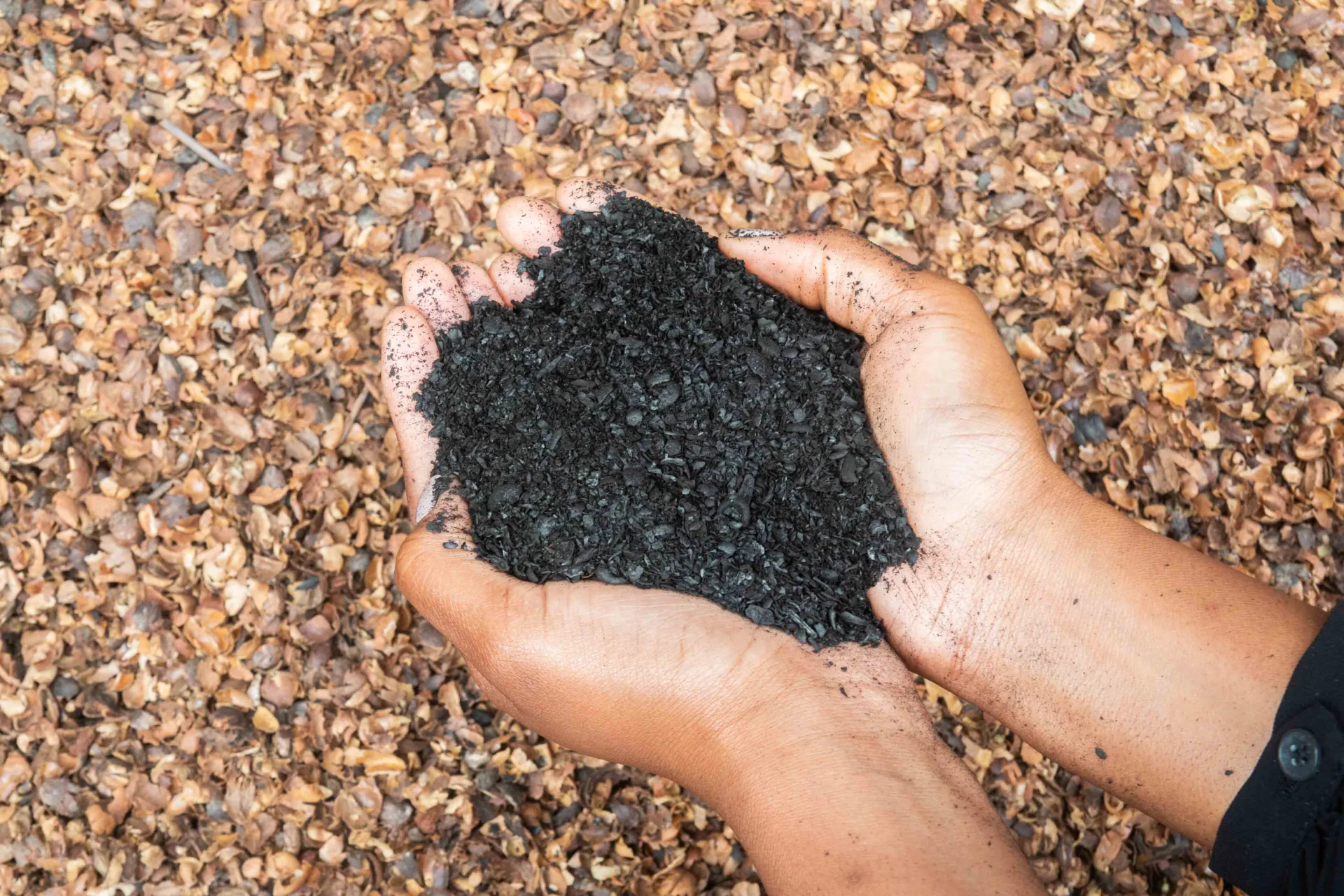
Biochar is essentially solid carbon extracted from plant residues.
It can be made from a wide range of organic matter. At NetZero, we only use agricultural residues as a feedstock (e.g., coffee husks, sugarcane bagasse, rice husk, coconut shells).
This feedstock is turned into biochar through pyrolysis, a thermochemical reaction where intense heating in the absence of oxygen breaks down complex molecular chains and rearranges molecular bonds to form a solid, very stable carbon product.
Although biochar can be used for many purposes, we focus on its agricultural use.
Uses of biochar
To maximise impact, we favour the agricultural use of biochar
Crop productivity
Biochar durably improves soil fertility by enhancing water and nutrient retention, leading to consistent yield increases and reduced fertiliser use — especially effective on tropical crops.
Land restoration
Biochar helps restore degraded and depleted soils by rebuilding soil structure, improving water retention, and reactivating microbial life — enabling vegetation to re-establish on land affected by erosion, deforestation, or intensive farming.
Single application, lasting benefits
No reapplication needed
Unlike compost or fertiliser, biochar resists microbial breakdown and leaching, so a single application keeps delivering results season after season.
Long-term soil improvement
Soil health indicators — water retention, nutrient availability, and microbial activity — continue to improve for years after application.
Compounding agronomic returns
As biochar stabilises in the soil, its agronomic benefits accumulate: sustained yield improvements with no further input required.
They use our biochar